
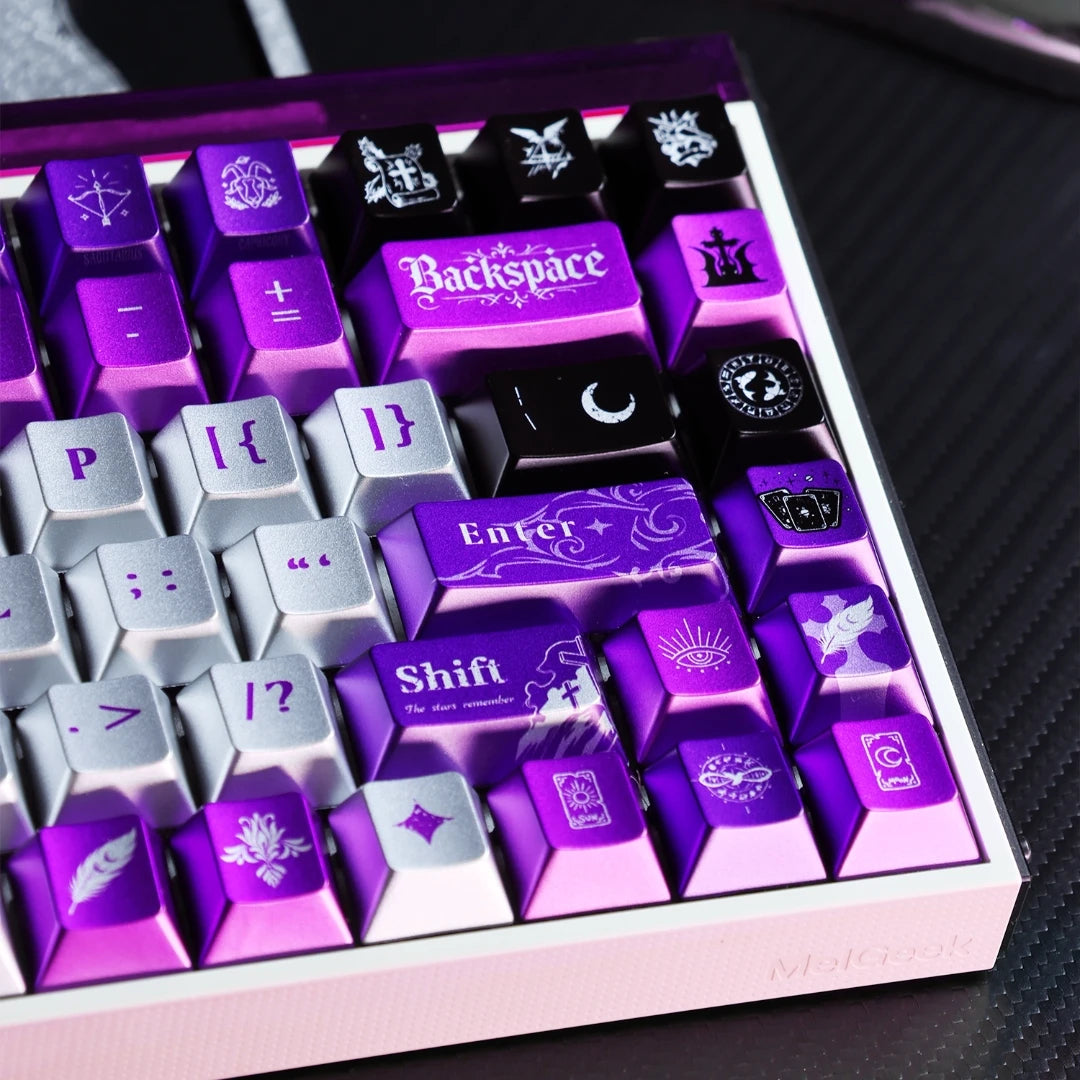
PBT vs ABS keycaps is one of the most common questions when choosing a new keycap set.
PBT keycaps are often associated with durability and a textured feel, while ABS keycaps are known for their smooth surface, strong colors, and wide range of designs. But which material is actually better?
The short answer is: neither material is automatically better for everyone.
The right choice depends on what you care about most—typing feel, sound, appearance, long-term wear, RGB lighting, or the overall design of your keyboard.
In this guide, we'll compare PBT and ABS keycaps in practical terms and explain what you should consider before buying a set.
Quick answer: Choose PBT if you prioritize a textured feel and resistance to visible shine. Choose ABS if you prefer a smoother surface, vibrant colors, and certain design or manufacturing options. Thickness, profile, legend method, and keyboard configuration can matter just as much as the plastic itself.
PBT vs ABS Keycaps at a Glance
| Feature | PBT Keycaps | ABS Keycaps |
|---|---|---|
| Surface feel | Usually more textured | Usually smoother |
| Long-term shine | Generally more resistant | More likely to develop shine |
| Color options | Excellent, but manufacturing-dependent | Excellent, especially for vibrant designs |
| Sound | Depends heavily on thickness, profile, and keyboard | Depends heavily on thickness, profile, and keyboard |
| RGB compatibility | Depends on legend design | Depends on legend design |
| Common use | Durable daily-use sets | Gaming, custom designs, smooth-feel sets |
| Best for | Users who prefer texture and durability | Users who prefer smoothness and visual variety |
This table is a starting point, not a rule.
A thick PBT keycap and a thin PBT keycap can sound very different. The same is true for ABS. Profile, construction, switch type, plate, case, stabilizers, and even the keyboard mounting system can all affect the final typing experience.

What Is the Difference Between PBT and ABS?
PBT stands for polybutylene terephthalate, while ABS stands for acrylonitrile butadiene styrene.
Both are thermoplastic materials commonly used for keycaps, but they have different physical characteristics.
For keyboard users, however, the most noticeable differences usually come down to three things:
-
How the keycap feels under your fingers
-
How the surface changes with use
-
How the keycap looks and sounds on your keyboard
The material is important, but it is only one part of the equation.
A keycap's thickness, profile, manufacturing process, texture, and legend method can have a significant effect on the final result.
How Do PBT and ABS Keycaps Feel?
Typing feel is often the first difference people notice.
PBT: More Texture
PBT keycaps commonly have a slightly textured or grainy surface.
That texture can provide a little more grip under your fingertips and can feel particularly pleasant during longer typing sessions.
Some users describe PBT as feeling more "dry" or "solid" compared with smooth ABS.
However, the exact feel depends on the manufacturing process and surface finish. Not every PBT keycap has the same texture.
ABS: Smoother Surface
ABS keycaps are generally associated with a smoother surface.
For some users, this creates a faster and more fluid feeling when moving between keys. Others simply prefer the softer, smoother sensation.
The difference can be especially noticeable when comparing a brand-new PBT keycap with a brand-new ABS keycap.
But surface texture is not determined by material alone.
A manufacturer can change the final feel through molding, finishing, texturing, and other production variables.

PBT vs ABS: What Happens After Long-Term Use?
One of the biggest reasons people choose PBT is its resistance to visible surface shine.
ABS keycaps can develop a smoother and shinier appearance on frequently used keys over time.
This is particularly noticeable on commonly pressed keys such as:
-
Spacebar
-
WASD
-
Shift
-
Enter
-
Ctrl
-
Frequently used letter keys
The areas touched most often can gradually become smoother than the rest of the keycap.
PBT generally maintains its textured surface for longer, although that does not mean PBT is completely immune to wear.
Every keycap eventually experiences some degree of physical wear.
The important distinction is that the visible appearance and rate of surface change can differ between materials and finishes.
Does ABS Always Become Shiny?
No.
This is an important distinction.
The tendency of ABS keycaps to develop shine does not mean every ABS keycap will look the same after the same amount of use.
Surface finish, plastic formulation, molding quality, texture, usage patterns, and even how frequently the keyboard is cleaned can affect the result.
Similarly, PBT should not be treated as a material that can never change with use.
If you're buying keycaps for many years of daily use, it is better to think of PBT as more resistant to the type of surface shine commonly associated with ABS, rather than completely wear-proof.

How Does Keycap Material Affect Sound?
This is where keyboard discussions can become misleading.
You may often hear statements such as:
"PBT sounds deeper."
or
"ABS sounds higher-pitched."
These descriptions can sometimes match a particular keyboard setup—but they should not be treated as universal rules.
The sound of a keycap depends on much more than its plastic.
For example:
-
Keycap material
-
Keycap thickness
-
Keycap profile
-
Switch type
-
Switch lubrication
-
Stabilizers
-
Plate material
-
Keyboard case
-
Mounting system
-
Foam and dampening
-
Desk surface
-
Typing force
all influence the final sound.
A thick PBT keycap on one keyboard may sound completely different from a thin PBT keycap on another.
The same applies to ABS.
Our Hands-On Comparison Setup
If you want to compare PBT and ABS fairly, keep as many variables as possible unchanged.
For example:
Keyboard: Same keyboard
Switches: Same switches
Stabilizers: Same stabilizers
Profile: Same or comparable profile
Typing position: Same desk and recording position
Recording equipment: Same microphone and settings
The only major variable should be the keycap material.
This produces a much more useful comparison than switching between two completely different keyboards.
What Should You Listen For?
Instead of asking whether PBT or ABS universally sounds "better," listen for the difference between the two materials on the same keyboard.
You may notice differences in:
-
Overall pitch
-
Bottom-out sound
-
Upstroke sound
-
Resonance
-
Perceived fullness
-
Sharpness of individual keystrokes
But your result is specific to the test configuration.
That is why an A/B recording is more useful than simply saying that one material "sounds better."

Thickness Matters More Than Many Buyers Expect
When comparing keycaps, don't look only at the material name.
Thickness can have a major effect on the typing experience and sound.
Two PBT keycap sets may feel and sound different because one uses significantly thicker walls.
The same is true for ABS.
This is why a product description that simply says "PBT" does not tell you everything you need to know.
If you're comparing two keycap sets, look for information about:
-
Material
-
Wall thickness
-
Profile
-
Manufacturing method
-
Surface finish
-
Legend method
-
Overall keycap construction
PBT vs ABS for RGB Keyboards
Material alone does not determine whether a keycap set will work well with RGB lighting.
The legend design and manufacturing method are equally important.
For example, a keycap can be made from PBT or ABS and still use different legend constructions.
If RGB visibility is important to you, check:
-
Whether the legends are translucent
-
Where the legends are positioned
-
Whether the keycap is shine-through
-
Whether the switch LED position matches the keycap design
-
Whether the profile affects the perceived brightness

PBT vs ABS: Which One Should You Choose?
There isn't a single correct answer.
Instead, choose based on your priorities.
Choose PBT If You:
-
Prefer a textured typing surface
-
Want better resistance to visible shine
-
Use your keyboard heavily every day
-
Prefer a slightly more tactile surface
-
Want a durable material for long-term use
PBT is particularly attractive for users who care about how their keycaps feel after months or years of regular typing.
Choose ABS If You:
-
Prefer a smoother surface
-
Like vibrant or complex color designs
-
Want specific visual finishes
-
Prefer the feel of smooth keycaps
-
Don't mind potential surface changes over time
ABS can also be an excellent choice for custom keyboard builds where color, design, or surface feel is more important than maximum resistance to shine.
Don't Choose Keycaps by Material Alone
This is perhaps the most important takeaway from the PBT vs ABS debate.
If you're choosing between two keycap sets, don't stop at the plastic.
Consider the complete specification:
1. Material
PBT or ABS is the starting point.
2. Profile
Cherry, OEM, MOA, and other profiles can produce noticeably different typing experiences.
3. Thickness
A thicker keycap can change both feel and sound.
4. Legend Method
Dye-sublimation, double-shot, and other legend methods have different visual and functional characteristics.
5. Layout Compatibility
Make sure the set actually includes the key sizes required by your keyboard.
6. Design
A technically excellent keycap set is still the wrong choice if you don't like looking at it every day.

PBT vs ABS: The Practical Verdict
So, are PBT keycaps better than ABS?
For many daily users, PBT is the easier recommendation if your priority is long-term surface feel and resistance to visible shine.
But ABS can be the better choice if you prefer a smoother surface or if a particular ABS set offers a design, colorway, or manufacturing method that you like more.
And in many cases, the difference between two keycap sets comes down to more than the material.
Profile, thickness, legend method, texture, and keyboard compatibility can matter just as much.
Instead of asking:
"Which material is better?"
Ask:
"Which combination of material, profile, thickness, legends, and design fits the way I use my keyboard?"
That's a much better way to choose keycaps.
Frequently Asked Questions
Are PBT keycaps better than ABS?
Not necessarily. PBT is generally more resistant to visible surface shine and often has a more textured feel, while ABS is usually smoother and can offer different design and color possibilities. The better choice depends on your priorities.
Do PBT keycaps sound better?
Not universally. Keycap material can affect sound, but thickness, profile, switches, stabilizers, case construction, and other factors also play important roles.
Do ABS keycaps always become shiny?
No. ABS keycaps can develop visible shine with frequent use, especially on heavily used keys, but the rate and appearance of wear depend on the specific keycap and how it is used.
Are thick PBT keycaps better?
Thickness can improve the feel or sound of a particular setup, but "better" depends on what you prefer. It should be considered together with profile, material, and construction.
Which is better for gaming, PBT or ABS?
Neither material is automatically better for gaming. Your preference for surface texture, smoothness, profile, and overall feel is more important.
Which material should I choose for a custom mechanical keyboard?
Start with your desired typing feel and appearance. Then compare material, profile, thickness, legend method, and layout compatibility. If you're unsure, PBT is a strong choice for users who prioritize texture and long-term resistance to visible shine.
Before You Buy: A Quick Keycap Checklist
Before adding a keycap set to your cart, check:
-
Material: PBT or ABS
-
Profile
-
Keycap thickness
-
Legend method
-
Surface texture
-
Keyboard layout compatibility
-
Required spacebar size
-
Required Shift and Enter sizes
-
RGB / shine-through requirements
-
Overall design and colorway
The material is only the beginning.
Once you know what you want from the typing experience, you can make a much more informed decision.
Explore More Keycap Guides
If you're still deciding which keycaps are right for your keyboard, start with our complete guide to keycap materials, manufacturing methods, and compatibility.
You can also learn more about:
-
Keycap sizes and unit measurements
-
How keycap profile changes typing feel
-
Dye-sublimation vs double-shot legends
-
How to choose a keycap set for your keyboard layout
When you're ready, compare the exact profile, key count, material, and legend method of each keycap set before ordering.
Compare the material, then check the exact profile, key count, and legend method on each set.

Share:
Will These Keycaps Fit Your Keyboard? A Practical Compatibility Guide